The readers recently read a story called Try Your Best. It is about a coach who inspires his students to believe in themselves. The students decided to celebrate this story by thanking a Calvert teacher who has helped them to believe in themselves or has made them feel better when sad.
The readers utilized inventive spelling when sounding out words which were unfamiliar to them; all other written words were spotted on our classroom sight word wall.
Last Friday we traveled to each teacher and delivered our thank yous. It was very special!
Showing posts with label 6th Age Reading. Show all posts
Thursday, April 11, 2013
Monday, April 1, 2013
Calvert Bear
What fun Calvert Bear is having!
First, did you know this boy and Calvert Bear celebrate the same birthday?! Second, this girl figured out that Calvert Bear loves yogurt! I'm sure this will come in handy when he visits friends in the future (wink, wink). For now I am extremely pleased with the effort my readers are placing into writing journal entries in C.S.'s special book. Keep up the great work, readers!
Sight Word Wallets
The readers made "sight word wallets" last week in class- this was such a fun and easy way to review words from our current story!

First, I photocopied our current list of sight words onto green paper; students then cut out the words and placed them in their "wallets". They were allowed to decorate their wallet to their heart's desire. For the next few days students will earn sight word money if they can read the words. A student had a great idea that the dollar value of each word would correlate with how many letters comprise that word. A four letter word, therefore, would be worth four dollars.
You can do this activity at home each night; as an incentive your child could earn an extra story (a longer read would be worth more money!) if they were able to read their words.
Thursday, March 21, 2013
Frog Life Cycle
The readers have been learning a lot about frogs. They recently acted out each stage in a frog's life cycle- take a peak!
Roll a Sight Word
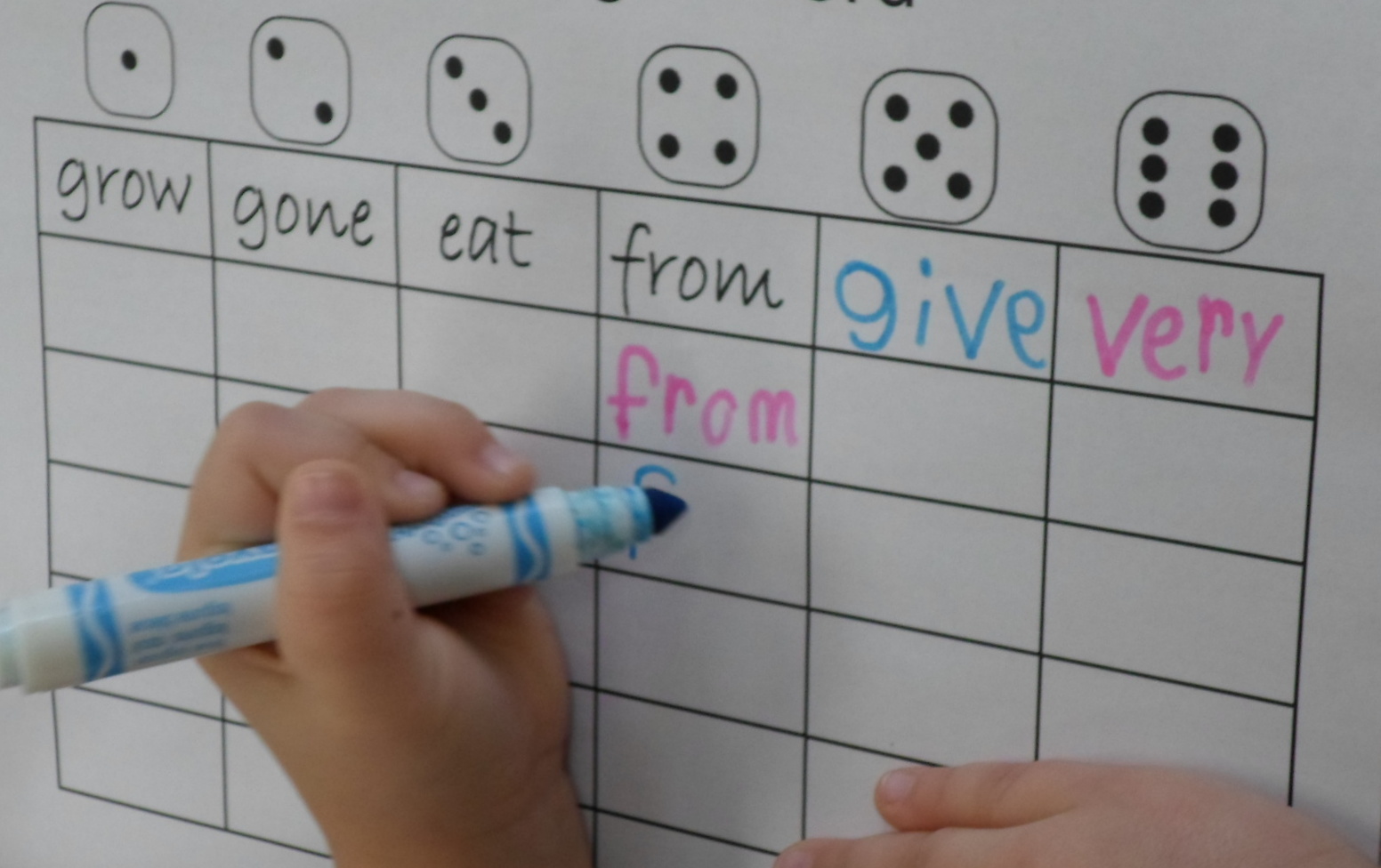
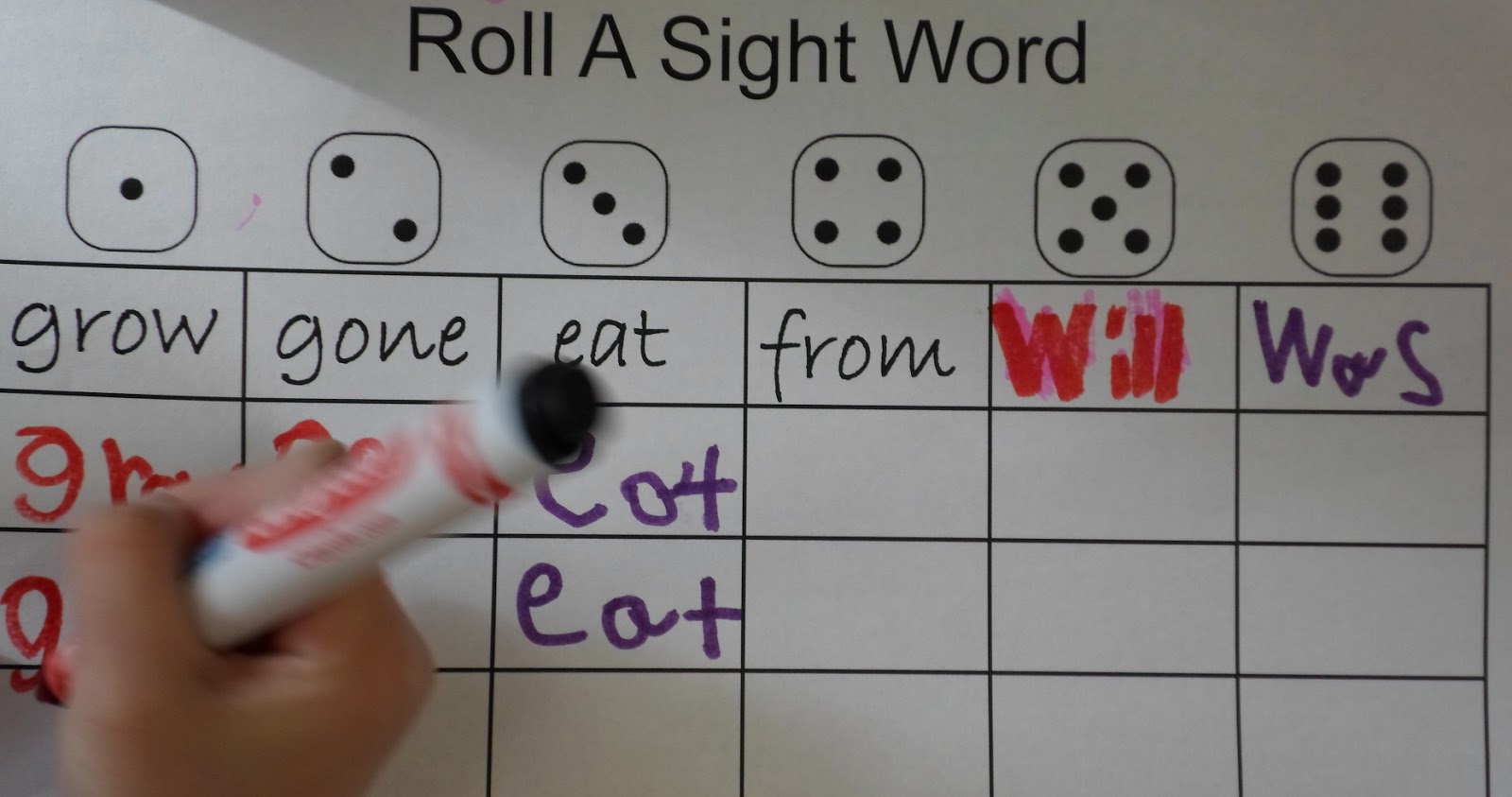
Yesterday the readers played the game "Roll a Sight Word" and they had a ton of fun! The object of the partner game was, upon rolling a dice, to write as many corresponding sight words as possible within a certain time frame.
Students began by spreading out around the room.
Next, they reviewed the sight words on their paper and chose an additional two words to add to the list.
Students began by spreading out around the room.
Next, they reviewed the sight words on their paper and chose an additional two words to add to the list.
Last, the students rolled a dice and filled in the sight word which corresponded to the number displayed.
This was a great way for the class to review words from our current story, Where Do Frogs Come From?
Wednesday, March 6, 2013
Sight Word Review
Are you a visual learner? An auditory learner? Or a kinesthetic learner? Chances are, you are a variety of all three! In different learning environments it may be more suitable for you to grasp a concept by listening to a teacher, watching a demonstration, or performing a task.
The kinesthetic approach to learning encourages students to carry out a physical activity. In this fashion, the readers reviewed their sight word knowledge last week by writing many of the words in sand. The student began by stating the word, followed by spelling it, one letter at a time. The sand was colorful and reminded the class of being at the beach!
Shaving cream, finger paint, food (such as M&Ms or goldfish), or small coins are additional ways to incorporate a kinesthetic approach into your sight word review at home.
Friday, October 26, 2012
Sentence Writing
Mrs. Goodman has been teaching the readers about proper sentence etiquette this week. The two areas she has focused on are:
- beginning a sentence with an uppercase letter
- ending a sentence with a punctuation mark, such as a period.
The students reviewed their understanding of sentences by looking through this week's story titled Ants. The class noted the uppercase letters and punctuation marks present at the beginning and end of all sentences. Then, Mrs. Goodman split the students into pairs where they worked together to form sentences from cut words on sentence strips. The pairs did a lovely job of organizing the sentences properly.
The readers concluded their sentence learning this week by writing and illustrating their own silly sentences about ants. Kudos!
Tuesday, October 16, 2012
Sight Words
The readers are learning about sight words! These words are often not phonetic (which means they can't be sounded out) and thus require memorization. Simple sight words pop up often in the literature that we read in class.
A simple way to practice weekly sight words (and review ones from weeks prior) is to create a sight word book from index cards and a binder ring. Each reading student has a sight word book that is added to at the beginning of the week and reviewed multiple times by the week's end. On Friday Mrs. Goodman and I assess the students' sight word knowledge by listening to each reader thumb through their sight word book.
Ample review of sight words is essential at home because additional class time is devoted to other important reading skills. Sight word lists can be found on this blog under "6th Age Reading Sight Words". Good luck and have fun!
A simple way to practice weekly sight words (and review ones from weeks prior) is to create a sight word book from index cards and a binder ring. Each reading student has a sight word book that is added to at the beginning of the week and reviewed multiple times by the week's end. On Friday Mrs. Goodman and I assess the students' sight word knowledge by listening to each reader thumb through their sight word book.
Ample review of sight words is essential at home because additional class time is devoted to other important reading skills. Sight word lists can be found on this blog under "6th Age Reading Sight Words". Good luck and have fun!
Tuesday, May 15, 2012
Venn Diagrams
The readers learned about venn diagrams last week and completed a fun partner activity.
We used two student portraits to illustrate two different people on our diagram. Each student's portrait was positioned in one portion of the large "hula hoop" circle, with the middle area of each circle overlapping. Students worked in pairs to define how these students were both alike and different. These describing words were then placed in appropriate areas on the diagram.
Students then completed a personal venn diagram between themselves and a partner, modeled after the one done together.
Utilizing tangible items, such as hoola hoops, readily aided the students in their understanding of this important reading tool.
We used two student portraits to illustrate two different people on our diagram. Each student's portrait was positioned in one portion of the large "hula hoop" circle, with the middle area of each circle overlapping. Students worked in pairs to define how these students were both alike and different. These describing words were then placed in appropriate areas on the diagram.
Utilizing tangible items, such as hoola hoops, readily aided the students in their understanding of this important reading tool.
Friday, March 16, 2012
The Puddle
The readers read a story called The Puddle this week in class. It is a fictitious tale of a boy who takes his toy boat out for a sail on a rainy day. The sailboat has a wonderful adventure on the "high sea"s and meets an alligator, an elephant, and even a turtle having tea!
To celebrate this story, the students made origami sailboats in class before documenting their own fictitious boating adventure.
Ships ahoy, readers!
Tuesday, March 13, 2012
Alphabet Letter Sounds
When students are learning the alphabet and corresponding letter sounds, they often add additional vowel sounds to the end of their pronunciation. For example, some students add "UH" to consonants such as /D/, /B/, and even /M/. This can be confusing when they begin to independently sound out words. In the word DOG, for example, you would not say /duh/ for the d sound, as it takes away from the meaning of the word- in short, the pronunciation of the word dog would be incorrect if this occurred. The below is a good example of proper letter sound pronunciation. Enjoy!
Tuesday, March 6, 2012
Bears Fact Web
To prepare for a nonfiction story about bears, students created fact webs in small groups. They did a nice job of listing items they wanted to share with the class.
We will utilize these webs when we complete the reading in class.
Nice teamwork, readers!
Saturday, January 21, 2012
Calvert Bear
Calvert Bear visited this student's home! He drank chocolate milk, played football, and even helped with some family chores (like taking out the trash). I didn't know this little bear was so helpful!
Friday, January 6, 2012
Calvert Bear
Calvert
Bear had a fabulous time over winter break with this friend! Calvert Bear had fun on the train to New York. He liked seeing the Rockettes and eating popcorn- he actually sat inside of the popcorn bucket in the theatre! He liked his dinner at home- he even had to time to play the piano AND he received a personal invitation to watch this student play her violin!
Wednesday, January 4, 2012
S-T-R-E-T-C-H Spelling
Stretch spelling, sometimes referred to as inventive spelling, is when a student exercises their knowledge of phonemes, the letters of the alphabet and their confidence in the alphabetic principle to write words.
Although I believe it is important to correct a child's written work, I also think it's essential to allow a student open-ended opportunities to use their current writing knowledge to increase their confidence in all they can accomplish.
Yesterday morning my reading students arrived with excitement, eager to share news of their recent winter breaks. I, too, was excited to hear about their travels, new toys, and holiday adventures- so I sent them to their journals, pencil-in-hand.
Each student was encouraged to draw a picture, highlighting a special event. After, they wrote at least two sentences describing this event in words. I was very impressed with their hard work. As you can tell, many students have a solid understanding of phonemes, sentence structure, punctuation, and general spelling rules. They did a fabulous job of utilizing stretch spelling in their writing. Bravo!
Although I believe it is important to correct a child's written work, I also think it's essential to allow a student open-ended opportunities to use their current writing knowledge to increase their confidence in all they can accomplish.
Yesterday morning my reading students arrived with excitement, eager to share news of their recent winter breaks. I, too, was excited to hear about their travels, new toys, and holiday adventures- so I sent them to their journals, pencil-in-hand.
Each student was encouraged to draw a picture, highlighting a special event. After, they wrote at least two sentences describing this event in words. I was very impressed with their hard work. As you can tell, many students have a solid understanding of phonemes, sentence structure, punctuation, and general spelling rules. They did a fabulous job of utilizing stretch spelling in their writing. Bravo!
Monday, December 12, 2011
Calvert Bear's Travels!
Calvert Bear has been listening to my reading students learn many new things over the past several months, and he wanted to join in on the excitement! Thus, a new project began last week where a student per week will take home Calvert Bear, and will then write about their experiences in a journal.
This student did a wonderful job of reflecting on her time with Calvert Bear- he took a swim, went to piano practice, and even toured this child's neighborhood to view the holiday lights.
I look forward to sharing many more of Calvert Bear's experiences soon!
Tuesday, November 29, 2011
Thank you, Calvert!
My Sixth Age Reading class recently finished reading a story titled Try Your Best, about a coach who helps his team try their best through motivation and praise. Upon reading, the students were asked to brainstorm a list of Calvert teachers who have helped them try their best, along with reasons why these Calvert people are so special.
Students drafted a "rough" or first draft, where they were encouraged to phonetically sound out words independently or utilize their sight word books. Students realized that mistakes are often made on first drafts (I'd like to think that showing my students a sample rough draft paper of my own was helpful).
Second, or final drafts, were written and then hand-delivered and read to these Calvert teachers this morning. Students were beaming afterwards! Thank you to my students for your hard work!
Students drafted a "rough" or first draft, where they were encouraged to phonetically sound out words independently or utilize their sight word books. Students realized that mistakes are often made on first drafts (I'd like to think that showing my students a sample rough draft paper of my own was helpful).
Second, or final drafts, were written and then hand-delivered and read to these Calvert teachers this morning. Students were beaming afterwards! Thank you to my students for your hard work!
Monday, November 7, 2011
The Birds, The Bees, and Our ABC's
Where have I been, you ask?
As you can tell, I have not been by my computer.
I have been exploring nature on Calvert's campus with Mrs. Miles readers.
A few weeks ago our classes gathered together in search of five organic items on a nature walk to Molly's Garden and Castalia.
Some of us collected these items in ziploc bags or small plastic cups.
Upon returning to the classroom the students used their phonics skills to list these items in word form. Students were encouraged to sound out the words independently, without teacher-support.
The students then organized these words in ABC order. They glued the words next to each item found on their nature walk. I was very pleased with the results- take a peak!
Again, I did not assist students with the spelling. Aren't you amazed?
Subscribe to:
Posts (Atom)